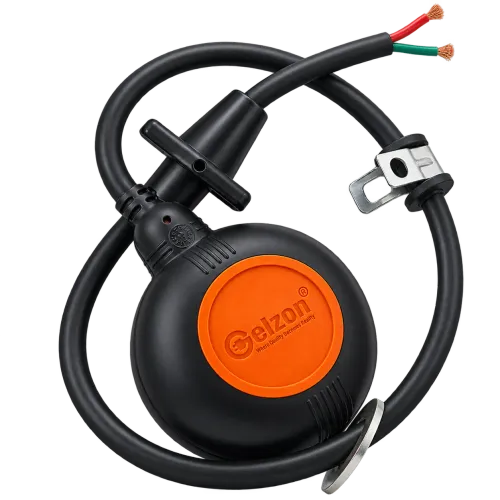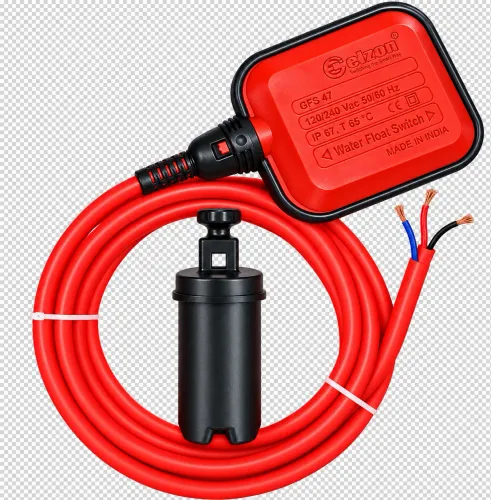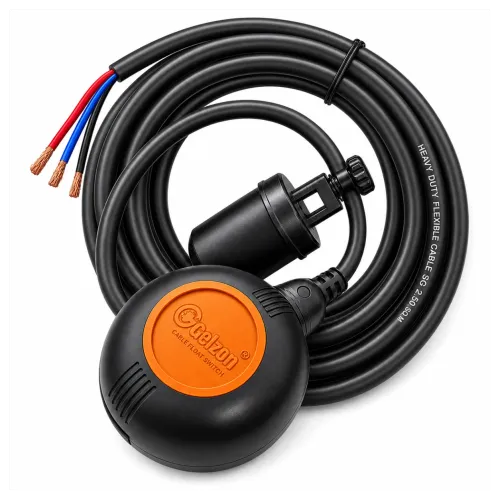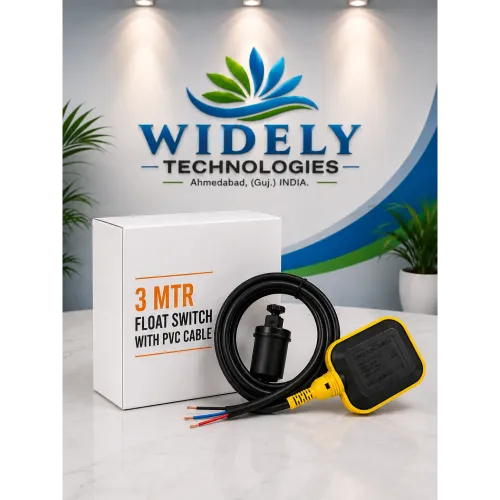
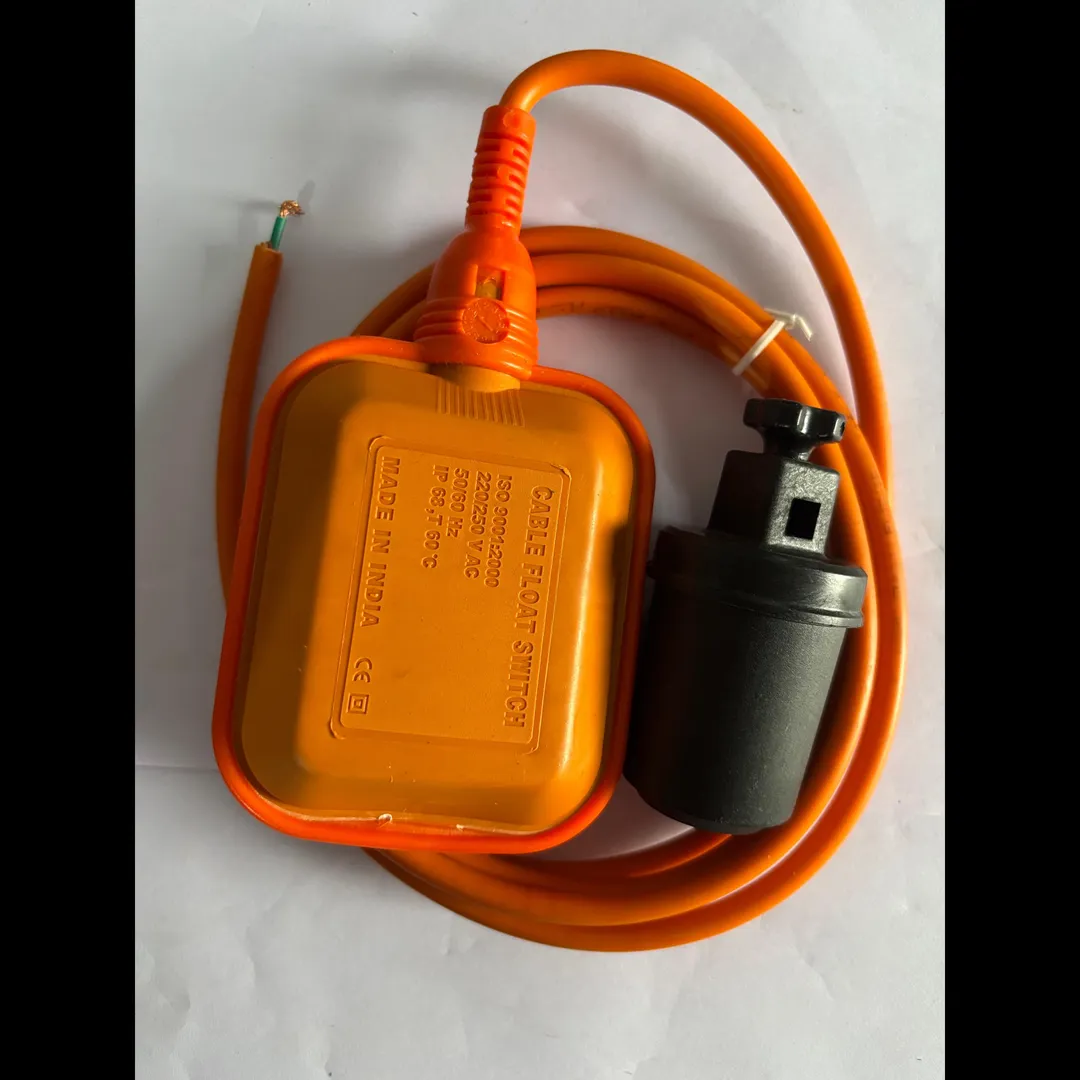
The image shows a **cable float switch** — a device commonly used to automatically control the level of liquids in tanks, wells, or sumps.
Here’s a breakdown of the information visible on the switch:
* **Type**: Cable Float Switch
* **Voltage Rating**: 220–250V AC
* **Frequency**: 50/60 Hz
* **Protection Class**: IP68 (fully waterproof for submersion)
* **Temperature Rating**: up to 60°C
* **Standard**: ISO 9001:2000
* **Country of Manufacture**: Made in India
### Function:
A cable float switch works by floating on the liquid surface. When the liquid level rises or falls, the switch tilts, triggering an internal microswitch to turn a pump or valve **on** or **off** automatically.
### Common Applications:
* Water tanks (for automatic filling or drainage)
* Sump pumps
* Sewage or wastewater systems
* Industrial liquid level control
Would you like me to explain **how to wire and install** this float switch for a specific setup (e.g., automatic water pump control)?
Here’s a breakdown of the information visible on the switch:
* **Type**: Cable Float Switch
* **Voltage Rating**: 220–250V AC
* **Frequency**: 50/60 Hz
* **Protection Class**: IP68 (fully waterproof for submersion)
* **Temperature Rating**: up to 60°C
* **Standard**: ISO 9001:2000
* **Country of Manufacture**: Made in India
### Function:
A cable float switch works by floating on the liquid surface. When the liquid level rises or falls, the switch tilts, triggering an internal microswitch to turn a pump or valve **on** or **off** automatically.
### Common Applications:
* Water tanks (for automatic filling or drainage)
* Sump pumps
* Sewage or wastewater systems
* Industrial liquid level control
Would you like me to explain **how to wire and install** this float switch for a specific setup (e.g., automatic water pump control)?
Keywords