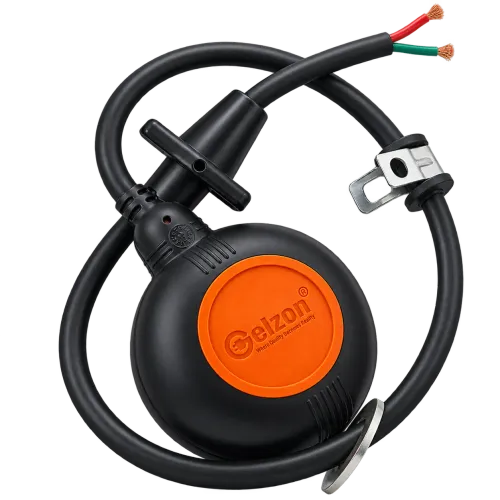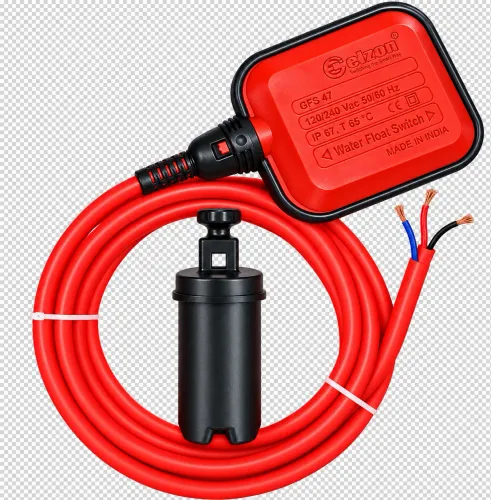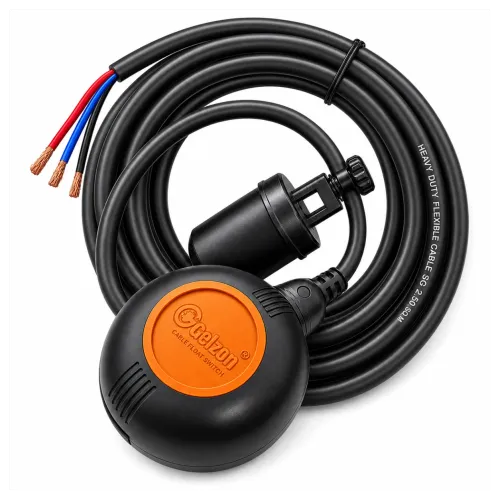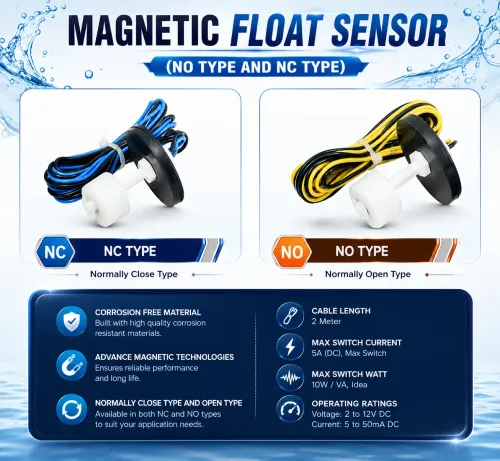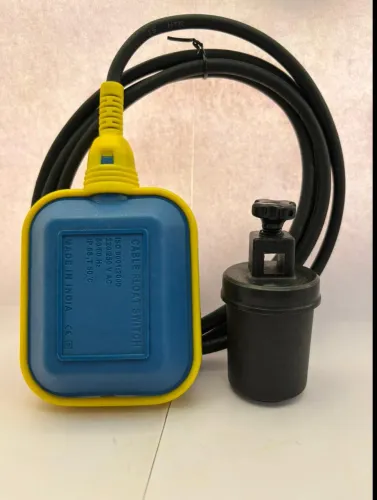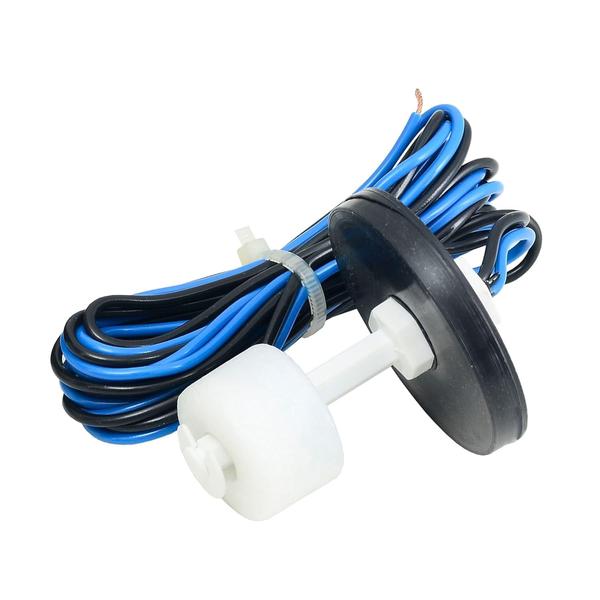
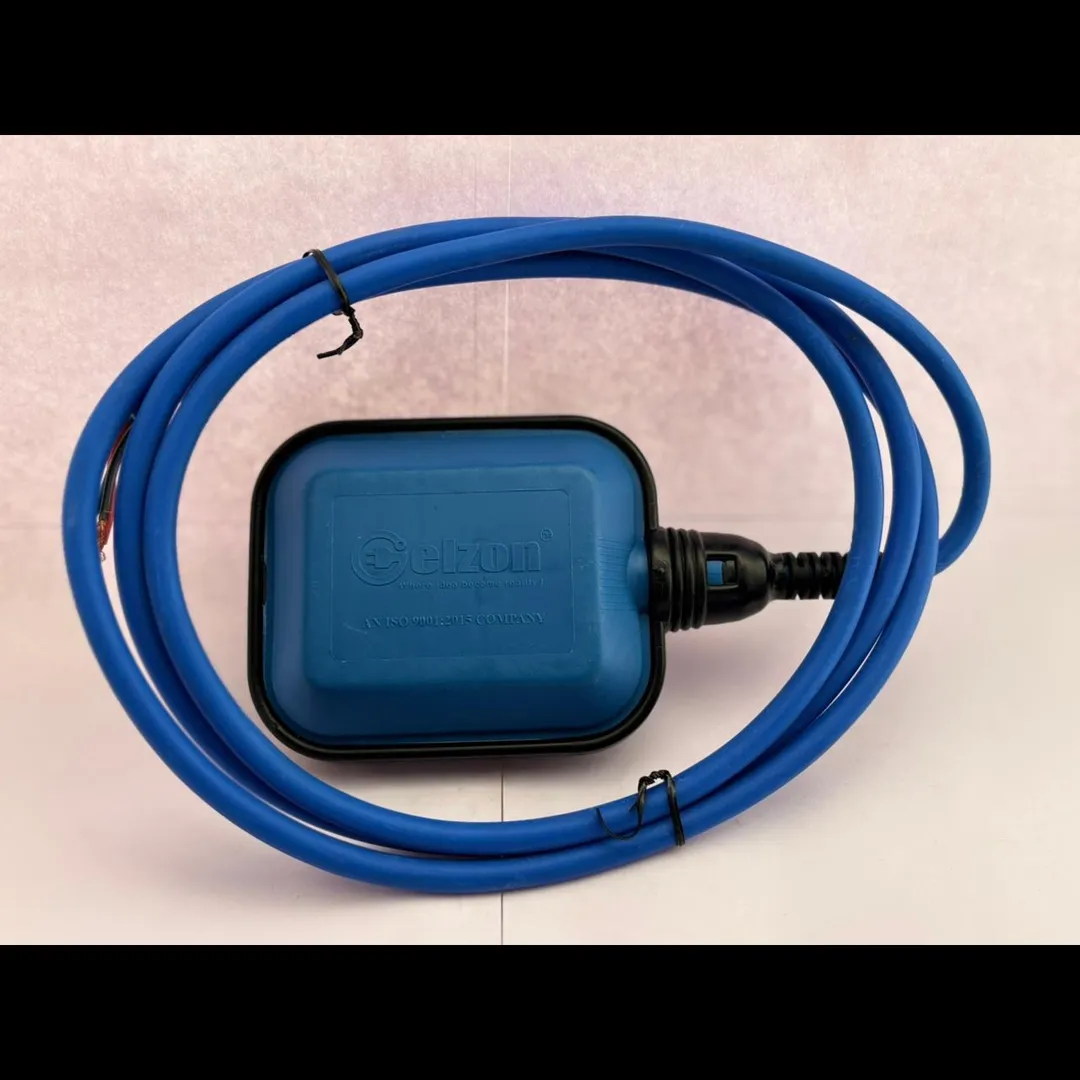
A cable float switch is a device that uses a buoyant float attached to a cable to detect liquid levels in tanks, wells, and sumps. As the float rises and falls with the liquid, it activates or deactivates an internal switch, which can then control a pump, trigger an alarm, or operate a valve. How it works The switch's waterproof casing contains a sealed microswitch or a ball-bearing mechanism. An adjustable counterweight on the cable sets the level at which the switch will activate. When the liquid level changes, the float tilts and the weight of the ball or mercury (in older models) inside the sealed float shifts, causing the switch to open or close an electrical circuit. The specific action of the switch—whether it turns a pump on or off—depends on how it is wired.
For filling a tank: You can wire the switch to turn the pump off when the liquid reaches a high level and turn it back on when the level drops.
For emptying a tank (sump pump): The switch is wired to turn the pump on when the liquid reaches a high level and turn it off when it falls to a low level.
Common applications
Sump pumps: Activating the pump to remove water from a basement or pit.
Water tanks: Controlling pumps to maintain or replenish the water level in overhead or underground tanks.
Sewage systems: Managing liquid levels in sewage treatment plants and effluent tanks.
Industrial processes: Use in chemical, water treatment, and food processing plants.
types of float switches There are two main categories of cable float switches, which differ in their design and action angle.
Pump switches: These are wide-angle switches, meaning they need to tilt significantly to activate. They are used for directly controlling pumps in applications like sumps and holding tanks. They are available with or without a piggyback plug for easy installation.
Control switches: These are narrow-angle switches that are more sensitive to slight changes in liquid level. They are often used with control panels or alarms to provide a signal rather than directly controlling a pump.
For filling a tank: You can wire the switch to turn the pump off when the liquid reaches a high level and turn it back on when the level drops.
For emptying a tank (sump pump): The switch is wired to turn the pump on when the liquid reaches a high level and turn it off when it falls to a low level.
Common applications
Sump pumps: Activating the pump to remove water from a basement or pit.
Water tanks: Controlling pumps to maintain or replenish the water level in overhead or underground tanks.
Sewage systems: Managing liquid levels in sewage treatment plants and effluent tanks.
Industrial processes: Use in chemical, water treatment, and food processing plants.
types of float switches There are two main categories of cable float switches, which differ in their design and action angle.
Pump switches: These are wide-angle switches, meaning they need to tilt significantly to activate. They are used for directly controlling pumps in applications like sumps and holding tanks. They are available with or without a piggyback plug for easy installation.
Control switches: These are narrow-angle switches that are more sensitive to slight changes in liquid level. They are often used with control panels or alarms to provide a signal rather than directly controlling a pump.
Keywords